These docs are in progress. Some pages are incomplete or may change. Report a problem
Digital channel
How to describe a technology online, whether on a standalone portal or inside the product itself.
Deployer docs menu
DTPR makes it easy to display transparency notices online, wherever your community might live. All icons and visual assets can be easily downloaded from the taxonomy and plugged into existing websites.
People have generally gone about deploying DTPR on the web in one of two ways. The first is as its own, standalone web presence. This works particularly well for organizations that manage large technology inventories, such as city governments or public space managers. Examples of this include the City of Long Beach’s Digital Rights Platform, or Michigan Central’s Transparency Portal. These pages can describe multiple types of technologies, and help to orient the public to how data is being used to impact their experiences in a holistic way.
The second way to deploy DTPR online is as part of a specific technology product. Icons can be displayed on a login page, a digital screen, or as part of any output. For instance, DTPR can be embedded in a chat interface to show how an AI is storing your responses, or using them to deliver a service This works particularly well for vendors or organizations that manage a limited number of technologies that they want to make sure the public is aware of.
Building your own channel
A digital channel is where people end up after a sign or an icon has caught their attention, so it needs to answer their questions and give them a way to respond. Four things to think about:
- Platform. Choose a platform that suits the people you are reaching: a dedicated website, a mobile app or a page on a portal you already run. Make sure it opens easily from a QR code, since that is how most visitors arrive from a sign.
- Interface. Keep navigation simple. A visitor should be able to go from the icons they saw to the full datachain, and from there to any further detail, without instructions.
- Information architecture. Organize the content around the datachain: what the technology is for, who is accountable for it, what data it uses and where that data goes. Lead with the purpose, and keep the detail that only a few readers need further down the page.
- Feedback. Give people a way to ask questions and share their views. That can be a contact form, a chat or the six questions of the feedback survey.
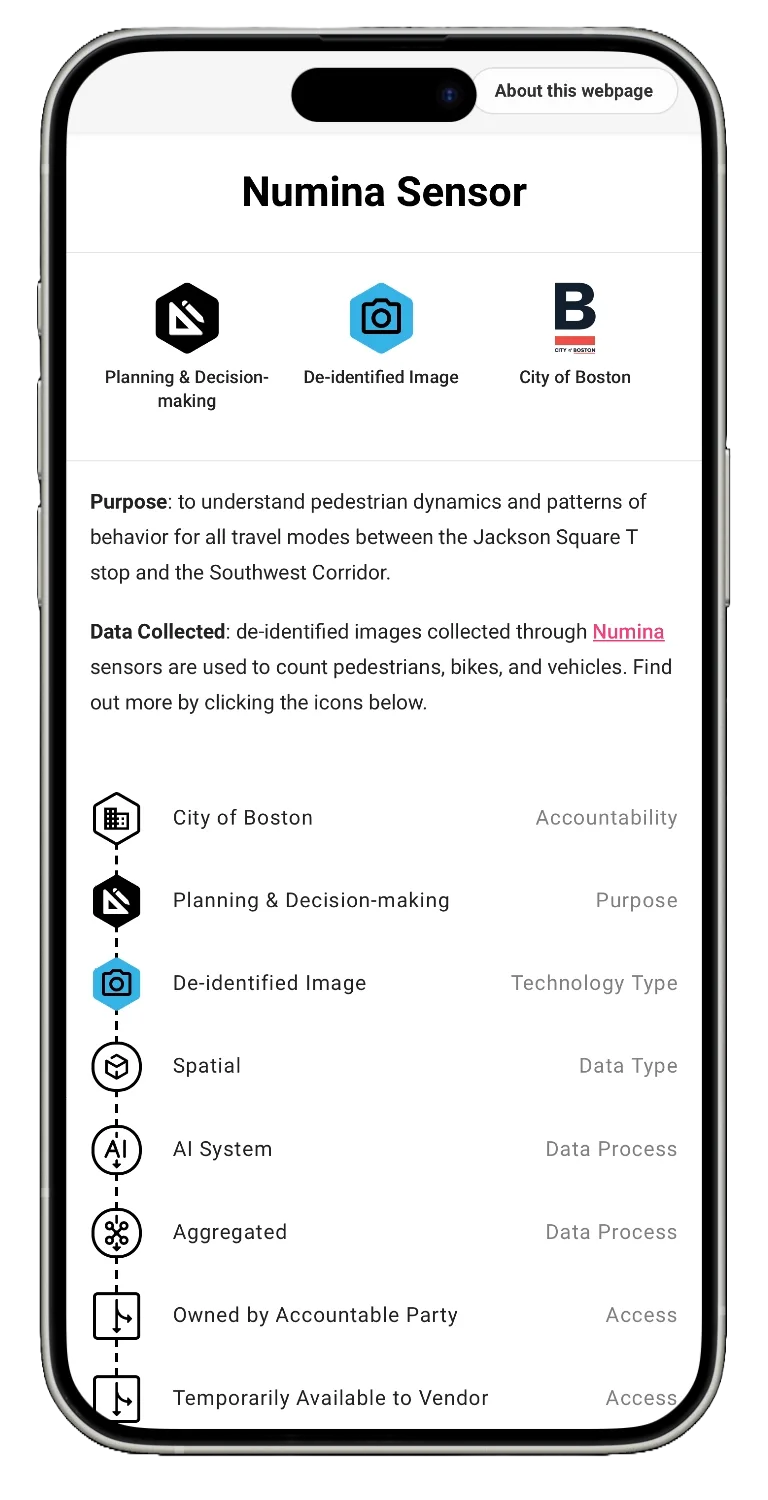
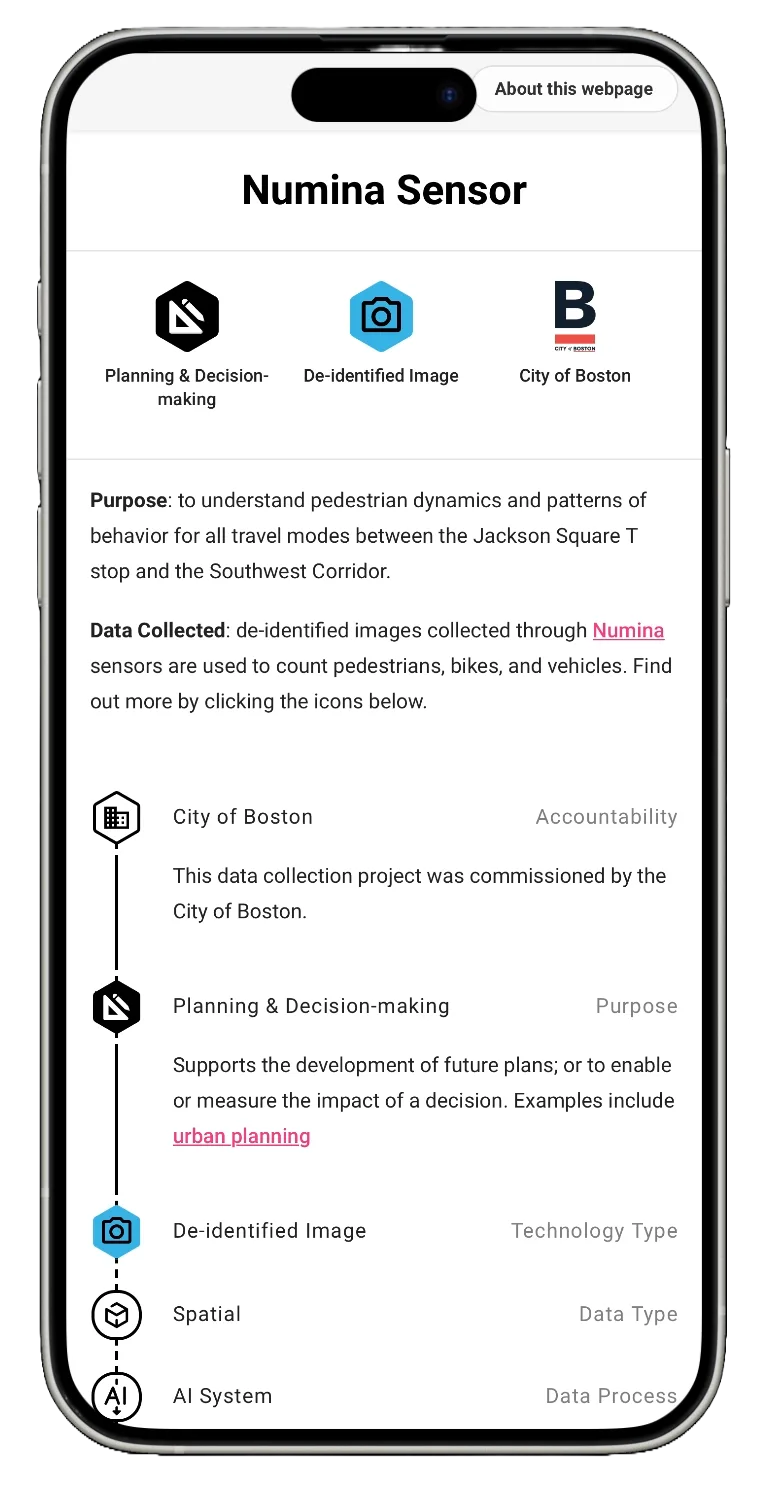
The original prototype
The original release of DTPR shipped with a prototype digital channel, shown below, to give deployers a picture of what their own channel could look like. It describes a pedestrian counting sensor in Boston. The prototype uses an earlier version of the taxonomy, so its category names and colours differ from the current one.